What are the 4 types of hydraulic hoses?
Hydraulic hoses are crucial components in hydraulic systems, responsible for transmitting fluid power from one component to another. These hoses are designed to withstand high-pressure and provide a reliable connection between various hydraulic components. There are four common types of hydraulic hoses, each having its unique characteristics and applications. Let''s dive into the world of hydraulic hoses and explore these four types in detail.
Type 1: SAE 100R1
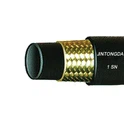
The SAE 100R1 hydraulic hose is one of the most commonly used types in hydraulic systems. It has a single steel wire braid reinforcement, providing moderate strength and flexibility. This type of hose is suitable for applications with medium pressure requirements, such as hydraulic oil lines, power steering, and agricultural equipment.
SAE 100R1 hoses have a synthetic rubber inner tube that is resistant to oil and weather, ensuring durability and longevity. The synthetic rubber cover protects the inner layers from abrasion, chemicals, and environmental factors. These hoses are compatible with petroleum-based hydraulic fluids and have a temperature range of -40°F to 212°F (-40°C to 100°C).
Type 2: SAE 100R2
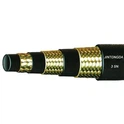
SAE 100R2 hydraulic hoses are an advanced version of the SAE 100R1 hoses. They feature two steel wire braids for enhanced strength and flexibility, making them suitable for high-pressure applications. These hoses are widely used in construction, mining, and industrial machinery.
The inner tube of SAE 100R2 hoses is made of synthetic rubber, resistant to oil and weather. The outer cover provides protection against abrasion, chemicals, and environmental conditions. These hoses have a broader temperature range, spanning from -40°F to 212°F (-40°C to 100°C), similar to SAE 100R1 hoses.
Type 3: SAE 100R3
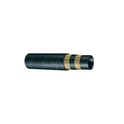
SAE 100R3 hydraulic hoses are used in low-pressure applications where resistance to external factors, such as abrasion, ozone, and weather, is crucial. These hoses have two layers of synthetic rubber or nylon reinforcement and are often employed in hydraulic systems with constant pressure.
The inner tube of SAE 100R3 hoses is made of synthetic rubber resistant to hydraulic fluids and water-based hydraulic fluid. The outer cover protects the inner layers from abrasion, ozone, and weather. These hoses have a temperature range of -40°F to 212°F (-40°C to 100°C), similar to SAE 100R1 and SAE 100R2 hoses.
Type 4: SAE 100R4
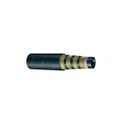
SAE 100R4 hydraulic hoses are designed for suction and return lines, commonly used in hydraulic systems where the fluid needs to be drained or returned to the reservoir. They have a helical wire spiral reinforcement embedded between layers of oil-resistant synthetic rubber.
The inner tube of SAE 100R4 hoses is made of synthetic rubber resistant to hydraulic fluids, water, and mild chemicals. The outer cover protects the hose from abrasion and external elements. These hoses have a temperature range of -40°F to 200°F (-40°C to 93°C), making them suitable for a wide range of applications.
Conclusion
Hydraulic hoses play a vital role in the smooth operation of hydraulic systems. Understanding the different types of hydraulic hoses can help in selecting the right hose for specific applications, ensuring optimal performance and safety.
SAE 100R1 hoses offer moderate strength and flexibility, suitable for medium-pressure applications. On the other hand, SAE 100R2 hoses provide enhanced strength and flexibility, making them ideal for high-pressure applications. SAE 100R3 hoses are used in low-pressure systems that require resistance to external factors. Lastly, SAE 100R4 hoses are designed for suction and return lines, efficiently managing fluid flow.
When selecting a hydraulic hose, it is essential to consider factors such as pressure requirements, temperature range, compatibility with hydraulic fluids, and resistance to abrasion and environmental conditions. **Choose the right hydraulic hose to ensure the efficient operation and longevity of your hydraulic system**.