Rubber hoses are widely used in a variety of industries due to their flexibility and durability. However, in some applications where high-pressure fluids are involved, there is a risk of pulsations or hydraulic shocks that can damage the hose. In this article, we will explore ways to improve the pulse performance of rubber hoses.
One way to increase the pulse performance of rubber hoses is to use materials with higher tensile strength and superior resistance to bending and fatigue. It is important that the hose is designed to withstand the high-pressure cycles that are typical of these applications. High-quality rubber compounds can be engineered to provide the necessary resistance to pulsations, ensuring that the hose remains intact and functioning for longer.
Another approach to improving the performance of rubber hoses under pulsating conditions is to design them with a thicker wall thickness. This will increase the hose's ability to resist damage from pulsations and also reduce the risk of leaking or bursting. A thicker wall can also help to reduce noise and vibration, making the hose more comfortable to work with for operators.
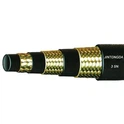
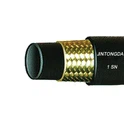
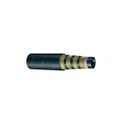
In addition, careful attention to the reinforcement layer of the hose will help to improve its pulsation resistance. The reinforcement layer is responsible for supporting the inner and outer tubes of the hose, preventing them from collapsing or rupturing under the high-pressure pulses. Reinforcement materials such as steel and nylon can be used to enhance the overall strength and durability of the hose, making it more resistant to fatigue and environmental conditions.
Furthermore, using hoses with a smooth inner bore can help to reduce turbulence and flow restriction that can result from pulsations. Smooth-bore hoses allow fluids to flow with more ease and consistency, reducing the risk of hydraulic shocks and related damage. This can lead to longer life and less downtime for the hose, increasing productivity and efficiency for the system and the users.
In conclusion, rubber hoses can be made to withstand the stresses and challenges of pulsating conditions by using high-quality materials, thicker walls, and reinforcement layers. Attention to the hose's internal design, such as smooth bore and proper reinforcement, can also go a long way in enhancing its performance under pulsating conditions. With these considerations in mind, users can be confident in the reliability and longevity of their rubber hoses, allowing them to operate smoothly and safely in a range of demanding applications.