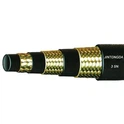
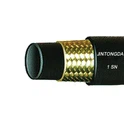
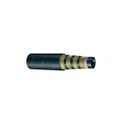
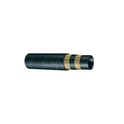
Rubber hoses, as a widely used flexible pipeline, play a crucial role in industry, agriculture, and daily life. They are used to transport various media such as water, gas, and chemical liquids, and their flexibility and durability make rubber hoses an ideal bridge between equipment and systems. So, does rubber hose belong to synthetic materials? The answer is: This depends on the specific material of the rubber hose.
Natural rubber and synthetic rubber
Rubber itself has two main types: natural rubber and synthetic rubber. Natural rubber is derived from latex from rubber trees and is a bio based material with good elasticity, wear resistance, and certain corrosion resistance. However, with the advancement of technology and the diversification of industrial demand, synthetic rubber has emerged and replaced or supplemented the position of natural rubber in many fields.
Characteristics of synthetic rubber hoses
Synthetic rubber, as the name suggests, is a polymer material prepared by chemical synthesis methods. It can adjust its chemical structure according to specific application requirements, thereby obtaining a wider range of performance characteristics than natural rubber, such as higher heat resistance, oil resistance, chemical resistance, and better mechanical strength. Common types of synthetic rubber include butadiene styrene rubber (SBR), chloroprene rubber (CR), ethylene propylene rubber (EPDM), silicone rubber, etc.
Application of synthetic materials for rubber hoses
Most modern rubber hoses are actually made of synthetic rubber or a mixture of natural rubber and synthetic rubber. This design combines the excellent elasticity of natural rubber with the special properties of synthetic rubber to meet the strict requirements of different working environments and transmission media. For example, in situations where high temperature resistance, oil resistance, or chemical corrosion resistance are required, specific types of synthetic rubber are often chosen as the main material for hoses.
Application area
Rubber hoses have shown wide applications in different industries due to their diverse materials. In the automotive industry, fuel pipes and brake pipes often use synthetic rubber hoses that are resistant to oil and high temperatures; In the chemical industry, corrosion-resistant rubber hoses are used to transport various chemical substances; In agricultural irrigation, rubber hoses with strong weather resistance can withstand outdoor environmental tests; In daily household life, garden watering hoses emphasize flexibility and aging resistance.
In summary, although the concept of rubber hoses encompasses both natural rubber and synthetic rubber materials, synthetic rubber dominates the manufacturing of rubber hoses in modern industrial and daily applications due to its customizable performance advantages. Therefore, in a broad sense, rubber hoses, especially those products with specific high-performance characteristics, can be considered an important application form of synthetic materials. With the continuous progress of materials science, rubber hoses will become more diverse in the future to meet the growing market demand and technological challenges.