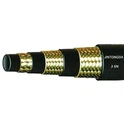
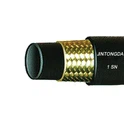
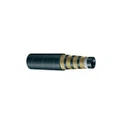
Rubber hose is an indispensable flexible pipe assembly widely used in all walks of life, especially in the industrial field. With its excellent elasticity and dielectric resistance, rubber hoses can effectively transfer liquids, gases, and even solid particles in a variety of complex conditions, while providing the necessary sealing and pressure resistance. The following is a detailed introduction to the rubber hose.
Basic structure and classification
The rubber hose is mainly composed of an inner rubber layer, a reinforced layer (if any) and an outer rubber layer. The inner rubber layer is in direct contact with the conveying medium, so rubber materials that are compatible with the medium and have good corrosion resistance are usually selected to ensure pollution-free transmission and prevent the medium from eroding the pipe wall. The outer adhesive layer needs to have weather resistance, wear resistance and anti-aging properties to resist the influence of external environmental factors and protect the internal structure.
1. Pure rubber hose (non-reinforced hose)
This type of hose has no intermediate reinforcement layer and is made of a single or composite rubber material. They are suitable for low-pressure, small-bore applications that require high flexibility, such as certain laboratory equipment, light agricultural irrigation or domestic drainage systems.
2. Reinforce the hose
The reinforced hose is embedded with a layer or multiple layers of reinforced material between the inner rubber layer and the outer rubber layer, such as fiber braided fabric (such as nylon, polyester), metal wire braided net, spiral steel wire, etc. These reinforced layers significantly improve the pressure bearing capacity and fatigue resistance of the hose, so that it can work stably under high pressure, large flow or complex motion conditions, and are widely used in petroleum, chemical, machinery, construction, fire and other fields.
Commonly used rubber material and characteristics
1. Natural Rubber (NR)
Derived from rubber tree SAP, it has good elasticity, elongation and resilience, low permeability to water and gas, and is suitable for manufacturing hoses that are not sensitive to low temperatures and require good flexibility and wear resistance.
2.Nitrile butadiene rubber (NBR)
Excellent resistance to oils, fuels and aromatic solvents, often used to transport hydraulic oil, lubricating oil and fuel oil and other medium hoses.
3. Neoprene rubber (CR)
Weather resistance, ozone resistance and chemical corrosion resistance, suitable for outdoor environment and contact with seawater, acid and alkali solution occasions.
4. Ethylene propylene Diene rubber (EPDM)
Excellent oxidation resistance, UV resistance and steam resistance, suitable for hot water, steam, hot air and hot water delivery systems containing acid and alkali.
5. Fluorine rubber (FKM)
It has the strongest resistance to high temperature and chemical media in all rubbers, and is suitable for the transportation of high temperature, strong acid, strong alkali or organic solvent in extreme environments.
In summary, rubber hoses have become an indispensable fluid transmission component in modern industrial systems with their diverse material choices, flexible structural design and wide range of application. Through reasonable selection, proper use and careful maintenance, rubber hoses can effectively ensure the safe and efficient operation of various operations.